Do You Need a Drill or an Impact Driver?
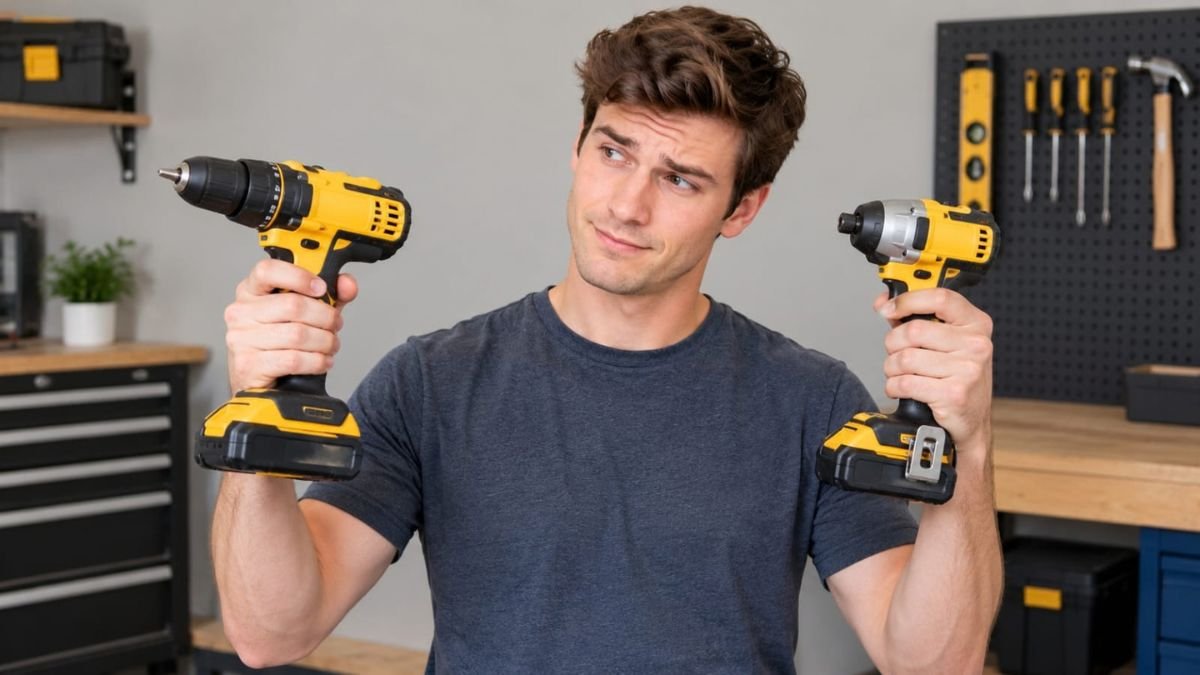
Walk into any hardware store and you will see cordless drills and impact drivers sitting side by side. They look similar, use batteries, and can both drive screws.
That makes the choice confusing.
So, when comparing cordless drills vs impact driver, which one should you buy for home repair?
The simple answer is this: a cordless drill is the better all-around tool for most homeowners, while an impact driver is better for driving long, large, or stubborn fasteners.
A drill can make holes and drive screws with good control. An impact driver is built to deliver short bursts of high rotational force when a fastener becomes difficult to drive.
Neither tool is better for every job. The right choice depends on the work you plan to do.
This complete guide breaks down cordless drills vs impact driver in simple terms. You will learn how each tool works, where it performs best, what features matter, common buying mistakes, and whether you should own one or both.
Table of Contents
- What Is a Cordless Drill?
- What Is an Impact Driver?
- Cordless Drills vs Impact Driver: Key Differences
- Which Tool Is Best for Home Repair?
- How to Choose the Right Tool
- Practical Tips for Using Both Tools
- Common Buying Mistakes
- Frequently Asked Questions
- Conclusion
- Key Takeaways
What Is a Cordless Drill?

A cordless drill is one of the most useful power tools for a home toolbox. It runs on a rechargeable battery and uses a rotating chuck to hold drill bits and driver bits.
Most modern drill/drivers offer variable speed and an adjustable clutch. The clutch helps control how much force the tool applies to a screw.
That control is important for everyday repair work. You can use less force for a small cabinet screw and more force for a larger wood screw.
Cordless Drills vs Impact Driver: What Can a Drill Do?
A cordless drill is a general-purpose tool. It can handle many common household jobs, including:
- Drilling holes in wood
- Drilling into plastic
- Drilling suitable metals with the correct bit
- Driving wood screws
- Installing cabinet handles
- Hanging shelves
- Installing curtain brackets
- Assembling furniture
- Making pilot holes
- Installing some wall anchors
The standard chuck is one of its biggest advantages. You can use different types and sizes of bits without needing a special adapter for every job.
For a homeowner who wants one power tool that can handle many tasks, a drill is often the logical starting point.
Cordless Drills vs Impact Driver: Why the Clutch Matters
One feature that beginners often overlook is the clutch.
The numbered ring behind the chuck lets you adjust the driving force. When the screw reaches a certain resistance, the clutch can stop the tool from applying more force.
This makes a drill useful when working with delicate materials. It can help prevent stripped screws and screws driven too deeply into wood.
That level of control is one reason a drill works well for furniture, cabinets, shelves, and other indoor repairs.
What Is an Impact Driver?
An impact driver is mainly designed for driving fasteners.
Although it looks similar to a drill, it uses an internal impact mechanism. When the fastener meets resistance, the mechanism delivers short bursts of rotational force.
This extra force helps the tool handle long screws, large fasteners, and demanding projects.
Most impact drivers use a 1/4-inch hex quick-change collet. This allows compatible driver bits to be changed quickly.
Cordless Drills vs Impact Driver: What Is an Impact Driver Best For?
An impact driver is particularly useful for:
- Long wood screws
- Structural screws
- Lag screws
- Deck construction
- Fence projects
- Outdoor woodworking
- Large fasteners
- Repetitive screw driving
- Removing stubborn screws
The high torque is helpful when resistance increases.
However, more power is not always better. An impact driver can easily overdrive a small screw if you are not careful.
For that reason, it may not be the best choice for delicate jobs where precise control matters more than raw power.
Cordless Drills vs Impact Driver: Key Differences
The easiest way to understand cordless drills vs impact driver is to look at their main strengths.
| Feature | Cordless Drill/Driver | Impact Driver |
|---|---|---|
| Main purpose | Drilling and general fastening | High-force fastening |
| Bit holder | Adjustable chuck | 1/4-inch hex collet |
| Torque | Moderate and adjustable | High |
| Control | Excellent | Good, but more aggressive |
| Drilling | Excellent | Possible with suitable accessories |
| Small screws | Excellent | Requires more care |
| Long screws | Good | Excellent |
| Large fasteners | Limited | Excellent |
| Furniture | Excellent | Can work, but needs care |
| Decks and fences | Good | Excellent |
| Versatility | Very high | More specialized |
| Noise | Usually lower | Usually higher |
The key difference is simple:
A drill is a versatile tool. An impact driver is a high-torque fastening tool.
A drill gives you steady rotational power. An impact driver adds impact action when the fastener becomes difficult to turn.
Cordless Drills vs Impact Driver: Which Has More Torque?
In most cases, an impact driver delivers considerably more driving torque than a standard cordless drill.
Torque is rotational force. Higher torque helps when driving long screws into dense wood or removing stubborn fasteners.
But maximum torque should not be your only buying factor.
A high-torque tool can make small jobs harder if you cannot control it easily. For light repairs, the drill’s clutch and smoother operation may be more useful.
Cordless Drills vs Impact Driver: Can You Drill With an Impact Driver?
Yes, but there is an important catch.
You can use an impact driver for some drilling jobs with suitable impact-rated accessories. Some manufacturers also offer adapters that allow certain drill bits to be used.
However, an impact driver is not a direct replacement for a drill.
If you regularly drill holes, a drill is normally easier to control. It is also better suited to jobs where smooth, steady rotation matters.
Which Tool Is Best for Home Repair?
For general home repair, a cordless drill is usually the more versatile option.
Think about common household jobs. You may need to drill a hole, install an anchor, drive a screw, and then adjust hardware. A drill can handle all of these tasks with the correct accessories.
An impact driver becomes more useful when your projects involve large fasteners or many screws.
Cordless Drills vs Impact Driver: Best Choice for Beginners
If you are buying your first power tool, a cordless drill is a strong starting point.
It can help with projects such as:
- Assembling flat-pack furniture.
- Installing shelves.
- Hanging curtain brackets.
- Installing cabinet handles.
- Drilling pilot holes.
- Driving common wood screws.
- Completing small DIY projects.
The clutch also gives beginners more control.
Start with a low clutch setting and increase it when necessary. This is safer for delicate materials than immediately using maximum power.
Cordless Drills vs Impact Driver: Best Choice for DIY Projects
If you frequently build decks, fences, sheds, outdoor furniture, or large woodworking projects, an impact driver can save time.
These projects often involve driving many long screws. An impact driver’s high torque is designed for this kind of work.
For serious DIY work, owning both tools can be useful.
Use the drill when you need to make holes or perform controlled fastening. Then switch to the impact driver when you need more force.
How to Choose the Right Tool
Once you understand cordless drills vs impact driver, you can look at the features that actually matter.
Do not buy a tool just because its box has the biggest numbers.
Cordless Drills vs Impact Driver: Brushless or Brushed?
You will often see tools described as brushed or brushless.
Brushed motors use physical brushes inside the motor. They are common and can cost less.
Brushless motors use electronic controls instead of traditional motor brushes. They are often marketed for better efficiency, longer runtime, and longer motor life.
If you use power tools regularly, paying extra for a brushless model may make sense.
For occasional repairs, a less expensive brushed tool can still be perfectly useful.
Battery Voltage and Runtime
Cordless tools commonly come in compact and higher-power battery systems.
You may see systems marketed around 12V, 18V, or 20V. Different manufacturers use different voltage labels and measurement methods.
Instead of focusing only on voltage, consider:
- Battery runtime
- Battery weight
- Charging time
- Replacement battery cost
- Number of batteries included
- Availability of other tools on the same platform
If you plan to buy several cordless tools, staying with one battery platform can be convenient.
A battery that works with your drill, impact driver, saw, and other tools can reduce the need to buy multiple chargers and battery systems.
Chuck Size and Bit Compatibility
A drill normally uses an adjustable chuck. Depending on the model, it may accept a wide range of drill and driver bits.
An impact driver usually uses a 1/4-inch hex collet.
This makes bit changes quick, but it also means you need compatible accessories.
When using an impact driver, choose accessories designed to handle impact forces when the manufacturer requires them.
Weight and Comfort
Do not ignore ergonomics.
A tool can have excellent specifications and still feel uncomfortable in your hand.
Look for:
- A comfortable grip
- Good balance
- Easy-to-use controls
- A bright work light
- Reasonable weight
- A battery that does not make the tool top-heavy
If possible, hold the tool before buying it.
For overhead work, even a small difference in weight can become noticeable after several minutes.
Practical Tips for Using Both Tools
Knowing cordless drills vs impact driver is only half the job. Using the tools correctly matters just as much.
Use the Right Bit
Always match the bit to the fastener and material.
A worn bit can slip and damage the screw head. With an impact driver, use impact-rated bits when appropriate.
Start Slowly
Do not immediately squeeze the trigger all the way.
Start slowly and increase speed as needed. This gives you better control and helps keep the bit properly seated.
Drill Pilot Holes When Needed
A pilot hole can make driving a screw easier and reduce the chance of splitting wood.
The correct pilot-hole size depends on the screw, material, and project.
Use the Drill Clutch
When driving small screws, use the clutch instead of maximum power.
This gives you better control and can prevent damage to the material.
Protect Your Eyes
Wear suitable eye protection when drilling or driving fasteners.
Small pieces of metal, wood chips, or broken material can become airborne during power-tool work.
Also follow the safety instructions supplied with your specific tool.
Common Buying Mistakes
Buying Only for Maximum Power
A huge torque number may look impressive, but it does not mean the tool is right for your home.
Consider how you actually work.
If most of your projects involve furniture and small repairs, control may matter more than maximum torque.
Buying an Impact Driver as a Complete Drill Replacement
An impact driver can perform some drilling tasks, but it is mainly a fastening tool.
If drilling is a regular part of your projects, keep a drill in your toolbox.
Choosing a Battery System Without Thinking Ahead
A cheap tool can become expensive if replacement batteries cost a lot or you later need several different chargers.
Think about your future tool collection before choosing a battery platform.
Ignoring Tool Size
A powerful tool can still be inconvenient if it is too large or heavy for the work you do.
For home repairs, compact tools are often easier to use in cabinets, closets, corners, and overhead spaces.
Using Too Much Force
Let the tool do the work.
Pushing harder does not always make a job faster. It can cause slipping, damaged fasteners, broken bits, or damage to the material.
Frequently Asked Questions
Is a cordless drill better than an impact driver?
Neither tool is better for every job. A cordless drill is more versatile and generally better for drilling and controlled fastening. An impact driver is better suited to high-force fastening.
Can an impact driver replace a cordless drill?
Not completely. An impact driver can handle some drilling tasks with suitable accessories, but a cordless drill is normally more convenient for regular drilling.
Should a beginner buy a drill or impact driver?
For most beginners, a cordless drill is the more versatile first purchase. It can drill holes and handle many common screw-driving jobs.
Do I need both a drill and an impact driver?
Not necessarily. One good drill can handle many home repairs. If you regularly build decks, fences, sheds, or other projects with many large screws, having both can be helpful.
Are brushless tools worth buying?
They can be worthwhile for people who use their tools frequently. Brushless models can offer efficiency and other performance benefits, but occasional users may be satisfied with a lower-cost brushed tool.
What is better for furniture assembly?
A cordless drill is usually the easier choice because its adjustable clutch gives you better control over small screws. An impact driver can be used, but extra care is needed to avoid overdriving fasteners.
Is an impact driver good for building a deck?
Yes. An impact driver is well suited to projects that require many long screws and high-force fastening. Its compact size can also be useful during repetitive work.
What is the difference between an impact driver and an impact wrench?
An impact driver commonly uses hex bits and is designed for driving screws and smaller fasteners. An impact wrench uses sockets and is generally intended for larger nuts and bolts, including automotive applications.
Conclusion
When comparing cordless drills vs impact driver, do not ask which tool is more powerful. Ask which tool matches your work.
A cordless drill is the better all-purpose option for most homeowners. It can drill holes, drive screws, install hardware, assemble furniture, and handle many everyday repairs.
An impact driver has a more focused job. It excels when you need to drive long screws, large fasteners, or many screws in a row.
If you are buying your first power tool, start with a good cordless drill/driver. If your DIY projects become more demanding, add an impact driver later.
And if you already know that you will be doing lots of heavy fastening, a drill-and-impact-driver combo kit can give you a flexible setup from day one.