A clogged drain can turn a normal morning into a frustrating mess. Water sits in the sink, the bathtub drains slowly, or the toilet refuses to empty. Before reaching for harsh chemicals or calling a plumber, many homeowners try a simple hand tool.
That raises an important question: drain snake vs plunger—which one should you use?
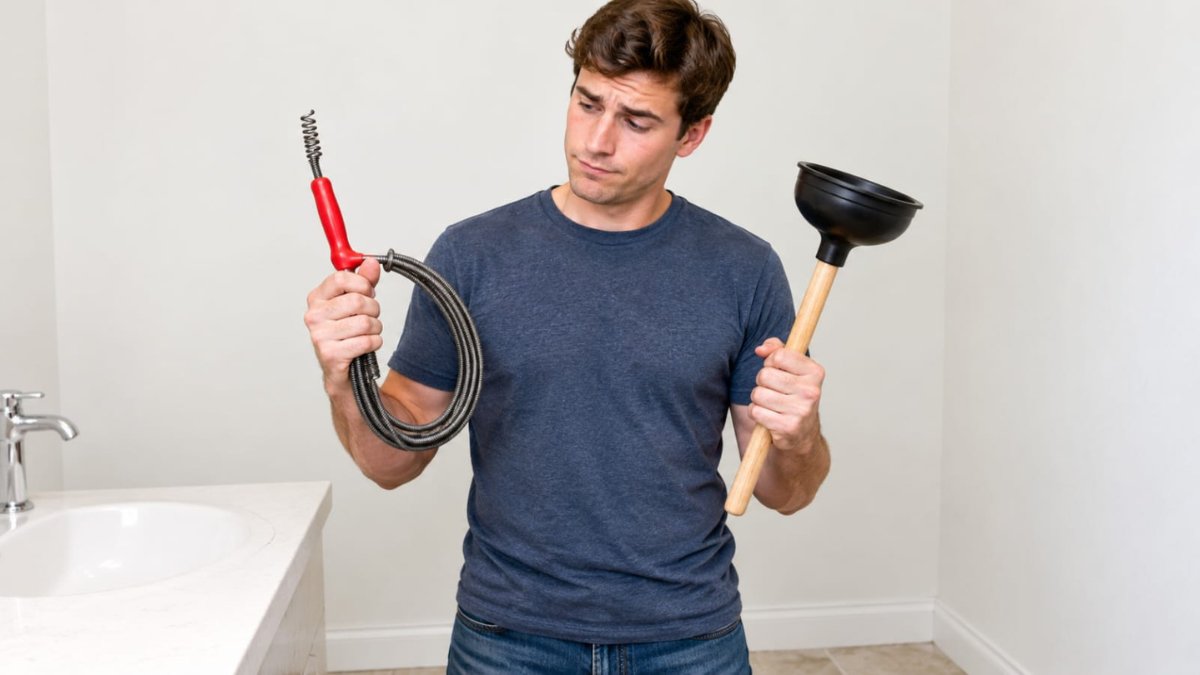
The answer depends on where the clog is, what caused it, and how deep it is inside the pipe. A plunger uses pressure to loosen or move a blockage. A drain snake physically reaches into the pipe and breaks apart or pulls out tougher clogs.
In many homes, you do not have to choose just one. A plunger is often the best first step, while a drain snake can help when plunging does not solve the problem.
This guide explains how both tools work, when to use each one, common mistakes to avoid, and when a DIY fix has reached its limit.
Table of Contents
- Drain Snake vs Plunger: What’s the Difference?
- When Should You Use a Plunger?
- When Should You Use a Drain Snake?
- Drain Snake vs Plunger: Side-by-Side Comparison
- How to Choose the Right Tool
- How to Use a Plunger Correctly
- How to Use a Drain Snake Correctly
- Common Mistakes to Avoid
- When to Call a Plumber
- FAQs
- Key Takeaways
- Conclusion
Drain Snake vs Plunger: What’s the Difference?
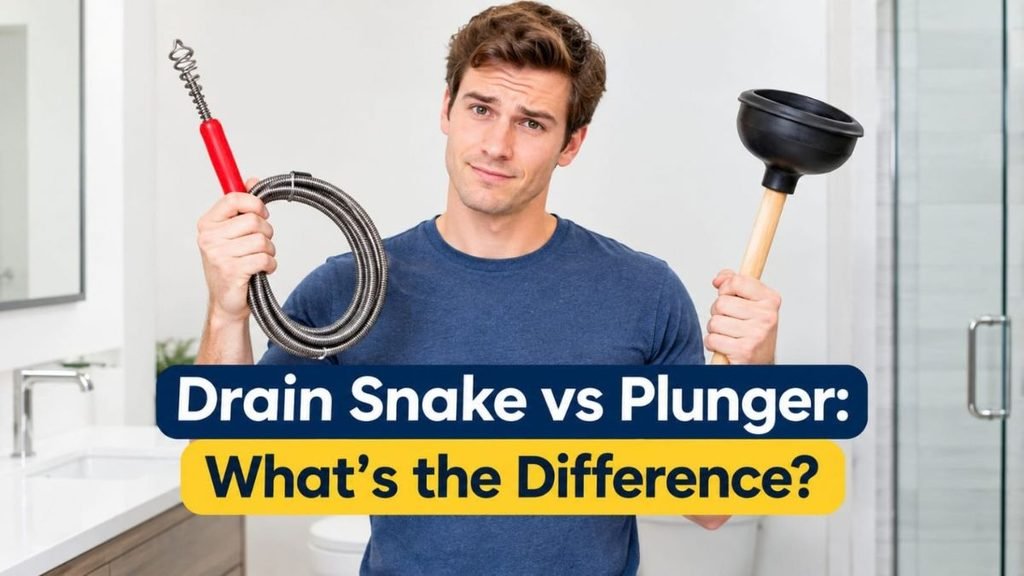
The basic difference is simple.
A plunger creates pressure inside the drain. That pressure can loosen a clog and help move it through the pipe. It works especially well when the blockage is fairly close to the drain opening.
A drain snake, also called a drain auger, uses a long flexible cable. You feed the cable into the pipe until it reaches the blockage. Depending on the type of snake, the cable can break apart the clog, grab it, or push it farther through the drain.
When comparing drain snake vs plunger, think about the location and type of blockage rather than simply choosing the stronger tool.
What a Plunger Does
A plunger works by creating a seal over the drain opening. When you push and pull the handle, pressure changes inside the drain.
That pressure can disturb common clogs caused by:
- Hair
- Soap buildup
- Food particles
- Paper and other soft waste
- Grease in some situations
There are different plungers for different jobs. A flat-cup sink plunger is designed for sinks and similar drains. A flange plunger has an extended rubber section that fits better into a toilet drain.
Using the correct plunger matters because a poor seal means less pressure reaches the blockage.
What a Drain Snake Does
A drain snake takes a more direct approach. Its cable travels into the drain and makes contact with the obstruction.
A small hand auger can be useful for a sink or bathtub drain. Larger machines are available for deeper or more serious blockages, but powered drain machines require more care and experience.
A snake can be especially useful when hair or another solid obstruction is sitting farther down the pipe.
When Should You Use a Plunger?
If the drain is completely or partly blocked and the water is still standing near the opening, a plunger is usually a sensible first tool.
For example, suppose your bathroom sink suddenly stops draining after months of working normally. A plunger may loosen the material causing the blockage without requiring you to remove any pipes.
The same applies to many toilet clogs. A proper toilet plunger can create enough pressure to move a typical obstruction through the trap.
When deciding drain snake vs plunger, start with the least invasive option that matches the problem.
A plunger is often a good choice when:
- The clog appeared recently.
- Water is standing in the fixture.
- You suspect a soft or loose blockage.
- The blockage is probably close to the drain.
- You have not already used a chemical drain cleaner.
- You want to try a low-cost solution first.
How to Tell If Plunging Is Working
Do not judge the result after only one push.
Place the plunger firmly over the opening and use controlled strokes. You want a strong seal rather than wild force.
After several strokes, remove the plunger and watch the water. If it drains faster, the blockage may be breaking up.
You can repeat the process if the drain continues to improve.
However, stop if the water does not move at all after several proper attempts. Continuing to plunge aggressively may not solve a deep obstruction.
When Should You Use a Drain Snake?
A drain snake becomes more useful when a plunger cannot clear the blockage or when you have reason to believe the obstruction is deeper inside the pipe.
For example, hair can form a dense mass inside a bathtub drain. A plunger may move some water around it without actually removing the hair. A small drain snake can reach the mass and pull it out.
The choice in drain snake vs plunger may also depend on the type of fixture.
A drain snake can be useful when:
- The plunger does not clear the clog.
- The drain is slow for a long time.
- You suspect hair is causing the blockage.
- The obstruction is deeper in the pipe.
- You can safely access the drain opening.
- You want to physically remove the clog.
A small manual snake is usually easier for homeowners to control than a large powered machine.
When a Drain Snake May Be the Better Option
Imagine a bathtub that has been draining slowly for several weeks. You have already removed visible hair from the drain cover, but the problem remains.
In that situation, a snake may make more sense than repeated plunging. The cable can travel deeper into the drain and reach material that you cannot see.
The same can apply to some bathroom sinks.
However, not every clog should be attacked with a snake. Older or damaged pipes may be more vulnerable to aggressive tools. If you are unsure about your plumbing system, use gentle methods or contact a professional.
Drain Snake vs Plunger: Side-by-Side Comparison
| Feature | Plunger | Drain Snake |
|---|---|---|
| Best for | Many simple clogs | Deeper or stubborn clogs |
| Main action | Creates pressure | Physically reaches the clog |
| Typical cost | Low | Low to moderate |
| Easy for beginners | Yes | Usually |
| Good for hair | Sometimes | Often |
| Good for toilet clogs | Yes, with the right plunger | Some toilet augers are designed for this |
| Risk of damage | Generally low when used correctly | Higher if used incorrectly |
| Removes clog physically | Usually no | Often can |
| Best first step | Often yes | Usually after plunging fails |
| Works on deep blockages | Limited | Better suited |
The key lesson from drain snake vs plunger is that neither tool is automatically better in every situation.
A plunger is often the easiest starting point. A drain snake becomes more useful when pressure alone cannot solve the problem.
How to Choose the Right Tool
Choosing between a drain snake and plunger becomes easier when you ask a few simple questions.
1. What Fixture Is Clogged?
A sink, bathtub, shower, and toilet may need different tools.
For toilets, use a toilet plunger or a toilet-specific auger. A standard sink plunger may not create the correct seal.
For bathroom sinks and tubs, a small hand snake can be useful for hair and buildup.
2. What Does the Clog Look Like?
A sudden blockage may be a simple obstruction near the drain. A drain that has become slower over several weeks could have buildup farther down the line.
Think about what normally goes down that drain. Food is common in kitchen sinks. Hair and soap are common in bathroom drains.
3. Have You Tried a Plunger?
If you have not tried a plunger and the situation appears simple, it is often worth trying first.
If proper plunging produces no improvement, a drain snake may be the next reasonable DIY step.
4. Is More Than One Drain Clogged?
This is an important warning sign.
If several fixtures are draining slowly at the same time, the problem may not be limited to one small blockage. It could involve a larger section of the plumbing system.
In that case, repeatedly using a hand tool may not fix the underlying issue.
How to Use a Plunger Correctly
Knowing drain snake vs plunger is only half the job. Using the tool correctly matters just as much.
Follow these steps:
- Remove visible debris from around the drain.
- Add enough water to cover the rubber part of the plunger.
- Position the plunger directly over the drain.
- Make a tight seal.
- Push down gently at first.
- Pull upward firmly while keeping the seal.
- Repeat several controlled strokes.
- Remove the plunger and check whether the water drains.
- Repeat if the drain is improving.
- Stop if there is no meaningful change.
For a sink with an overflow opening, covering that opening with a damp cloth can help maintain pressure.
Do not use excessive force. The goal is controlled pressure, not brute strength.
How to Use a Drain Snake Correctly
If plunging does not work, a hand drain snake may be the next step.
Here is a basic process:
- Remove the drain stopper if necessary.
- Feed the end of the cable into the drain.
- Turn the handle slowly.
- Continue feeding the cable while rotating it.
- When you feel resistance, avoid forcing the cable.
- Work the cable back and forth gently.
- Try to hook or break up the obstruction.
- Slowly pull the cable back out.
- Clean the cable after use.
- Run water to test the drain.
When using a snake, patience is important. If the cable suddenly becomes difficult to move, forcing it may damage the pipe or leave the cable stuck.
Never assume that more force means better results.
Common Mistakes to Avoid
A few simple mistakes can turn a small clog into a larger plumbing problem.
Using the Wrong Plunger
A toilet plunger and a sink plunger are not identical. Use a tool designed for the fixture you are working on.
Plunging Without a Seal
If air escapes around the edge of the plunger, much of your effort is wasted.
Make sure the rubber cup covers the drain opening properly.
Pushing a Snake Too Hard
A drain snake should be controlled, not forced. If you encounter unusual resistance, stop and reassess.
Mixing Chemical Drain Cleaners
Never casually mix different drain-cleaning chemicals. Dangerous reactions can occur.
Also remember that chemical residue may remain in a clogged drain. If a chemical cleaner has already been used, take extra care before opening the drain or using a tool.
Ignoring a Recurring Clog
A drain that repeatedly clogs may have an underlying plumbing issue.
Constantly clearing the same blockage without finding the cause can waste time and money.
When to Call a Plumber
DIY drain cleaning is useful for many minor blockages, but it has limits.
Consider calling a licensed plumber if:
- Several drains are clogged at once.
- Wastewater backs up into another fixture.
- The clog keeps returning.
- You hear unusual gurgling from the pipes.
- Water backs up into the tub or shower.
- You suspect a damaged or collapsed pipe.
- A drain snake becomes stuck.
- You have already used chemical drain cleaner and need further work.
- You cannot identify the source of the problem.
A professional can inspect the plumbing and determine whether the issue is inside the fixture, the drain line, or a larger sewer system.
If you are unsure whether to continue with drain snake vs plunger, stopping before you cause damage is often the safer choice.
Practical Tips for Preventing Clogged Drains
The easiest clog to fix is the one you prevent.
Try these habits:
- Use a hair catcher in shower and bathtub drains.
- Keep food scraps out of sink drains.
- Avoid pouring large amounts of grease down the drain.
- Clean drain stoppers regularly.
- Flush drains with appropriate amounts of water.
- Do not treat the toilet as a trash bin.
- Deal with slow drainage early rather than waiting for a complete blockage.
Regular cleaning can reduce buildup and help you notice plumbing problems before they become serious.
FAQs
Is a drain snake better than a plunger?
Neither tool is always better. A plunger is often a good first choice for a simple clog near the drain. A snake may work better for deeper or stubborn blockages.
Should I use a plunger or snake first?
For many simple clogs, try the correct plunger first. If several proper attempts do not improve the drainage, a small drain snake may be the next option.
Can a drain snake damage pipes?
It can if used incorrectly. Excessive force, the wrong type of snake, or aggressive use on fragile plumbing can cause problems. Use steady, controlled movements.
Can a plunger remove a hair clog?
It can sometimes loosen a hair clog, but it may not physically remove the hair. If hair is packed deeper in the drain, a small snake may be more effective.
Can I use a drain snake in a toilet?
Use a toilet-specific auger rather than automatically using a standard drain snake. Toilet augers are designed to work through the shape of a toilet trap while reducing the risk of scratching the fixture.
Should I use chemical drain cleaner before a drain snake?
It is better not to rely on chemical cleaners before mechanical tools. Chemical residue can create a safety hazard when you later work on the drain. Always follow the product label and safety instructions.
Why does my drain keep clogging?
Recurring clogs can result from repeated buildup, poor drainage, foreign objects, pipe damage, or a larger plumbing problem. If the same drain repeatedly blocks after cleaning, professional inspection may be worthwhile.
What if all my drains are slow?
When multiple drains become slow or back up together, the issue may be farther down the plumbing system. This is a good reason to stop treating each drain as a separate clog and contact a plumbing professional.
Conclusion
When comparing drain snake vs plunger, there is no single winner for every clogged drain.
A plunger is usually the simplest place to start because it is inexpensive, easy to use, and effective against many common blockages. If plunging does not solve the problem, a hand drain snake can reach deeper into the pipe and physically work on the obstruction.
The most important thing is to match the tool to the problem. Use controlled pressure with a plunger, gentle movements with a drain snake, and avoid aggressive methods that could damage your plumbing.
If the clog keeps returning, affects multiple drains, or shows signs of a larger plumbing issue, it is time to move beyond DIY methods and have the system inspected.