
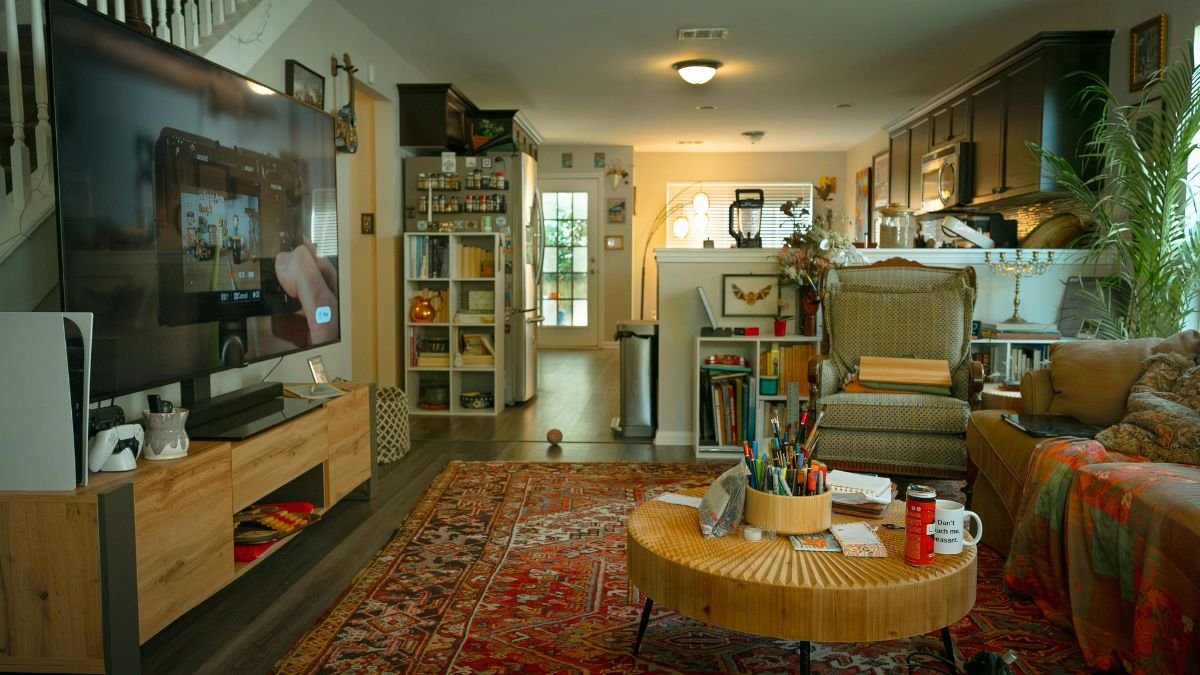
Have you ever cleaned your living room, put everything away, and still felt like the space looked messy? If you have wondered why your living room feels cluttered, the problem may not be the amount of dirt or dust. It may be the way furniture, colors, decorations, storage, and everyday items are arranged.
A room can feel crowded even when there is not much on the floor. Too much furniture, busy shelves, poor storage, blocked walking paths, and mismatched decor can all create visual clutter.
The good news is that you do not need to redesign your entire home. A few smart changes can make your living room feel more open, comfortable, and organized.
This guide explains the most common causes of living room clutter and shows you how to fix them without making the room feel empty or boring.
Why Your Living Room Feels Cluttered
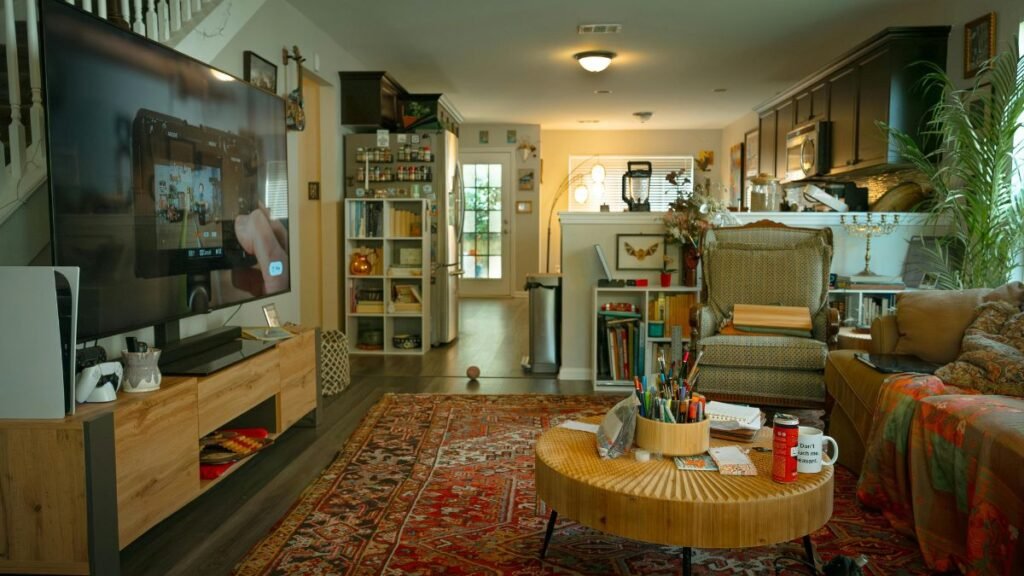
A cluttered living room is a space that feels visually busy, crowded, or difficult to use, even if it is reasonably clean. The feeling often comes from too many visible objects, furniture that does not fit the room, poor organization, or a lack of clear open space.
In other words, clutter is not always about how much you own. It is also about what your eyes see at once.
For example, a coffee table with a lamp, books, candles, remote controls, flowers, and several small decorations may not seem terrible individually. Together, however, they create visual noise.
Here are the most common reasons your living room may feel cluttered.
1. Too Much Furniture
One of the biggest reasons a living room feels crowded is simply having too much furniture.
It is easy to add pieces over time. You might start with a sofa, then add an armchair, side table, storage cabinet, ottoman, floor lamp, and another chair. Each item has a purpose, but together they may leave very little breathing room.
How to fix it
Look at every large piece and ask:
- Do we use this regularly?
- Does it make the room more comfortable?
- Does it block movement?
- Could another piece serve the same purpose?
- Does the room look better without it?
If a chair is rarely used or an oversized table takes up valuable floor space, consider removing or replacing it.
You do not have to create a minimalist room. The goal is to create enough negative space around your furniture so the room can breathe.
2. Poor Furniture Placement
Even the right amount of furniture can make a room feel cluttered when it is placed poorly.
Furniture pushed against every wall can make the room feel awkward. Large pieces placed too close to doorways can also interrupt movement.
Create clear walking paths
Start by identifying the main routes through the room. People should be able to walk between the sofa, doors, windows, and other important areas without constantly moving around furniture.
Try moving furniture a few inches at a time. Small changes can make a surprising difference.
Also, avoid placing every piece at the same distance from the walls simply because it seems like the safest choice. Your arrangement should support how you actually use the room.
3. Too Many Small Decorative Items
Small decorations are easy to collect. A few candles, framed photos, vases, figurines, books, plants, and souvenirs can slowly take over shelves and tables.
The problem is not necessarily that these items are unattractive. The problem is that too many competing objects make the eye work harder.
Try the grouping method
Instead of spreading ten small items around the room, group a few of your favorites together.
For example:
- Place three books on a coffee table.
- Add one decorative object on top.
- Keep part of the table completely clear.
This creates a focal point without making every surface look busy.
A useful rule is to leave some surfaces partially empty. Empty space is part of good interior design.
4. Open Shelves Full of Stuff
Open shelving looks beautiful in photos, but it can become one of the biggest sources of visual clutter.
When every shelf is packed, there is no visual break between objects. Even organized belongings can look messy when there are simply too many of them.
How to make open shelves look calmer
Remove everything from one shelf and start again.
Keep the items that are useful, meaningful, or visually attractive. Then leave some empty space between groups.
You can also mix different heights and shapes instead of lining up dozens of objects.
For items you use often but do not want on display, closed cabinets or attractive storage baskets can be a better choice.
5. Not Enough Storage
Sometimes the problem is not that you own too much. Your living room may simply lack a place for everyday items.
Remote controls, chargers, blankets, toys, books, magazines, and electronics often end up on sofas, tables, and floors because there is nowhere convenient to put them.
Use storage where clutter happens
The best storage is usually close to the place where you use it.
Consider:
- Baskets beside the sofa for blankets
- A storage ottoman for small items
- A media cabinet with closed compartments
- Baskets on lower shelves
- A small tray for remote controls
- Furniture with built-in storage
The easier something is to put away, the more likely your family will actually put it away.
6. Visual Clutter From Colors and Patterns
Your living room can feel cluttered even when it is physically tidy.
Strong colors, multiple patterns, shiny surfaces, and many different materials can compete for attention.
For example, a patterned rug, printed curtains, colorful cushions, bold artwork, and several decorative colors may all look good separately. Together, they can make the room feel visually busy.
Create a simple color plan
You do not need to use only neutral colors.
Instead, choose a simple base and repeat a few accent colors throughout the room. This creates a stronger sense of connection between different pieces.
If the room already feels busy, try reducing the number of competing patterns before buying new decor.
7. Floor Clutter and Everyday Items
The floor is one of the first places people notice clutter.
Shoes, children’s toys, pet supplies, bags, blankets, books, and exercise equipment can quickly make a living room look untidy.
Give common items a home
Create simple drop zones for things that regularly enter the room.
For example, use a basket for blankets, a cabinet for electronics, and a specific container for children’s toys.
If something has no home, it will probably end up somewhere random.
How to Fix a Cluttered Living Room
You do not need to spend a weekend throwing everything away. Work in small stages instead.
Step 1: Clear the visible surfaces
Start with the coffee table, side tables, shelves, and TV cabinet.
Remove everything and put the items into three groups:
- Keep in the living room
- Move somewhere else
- Donate, recycle, or discard
Do not worry about perfect organization yet. First, reduce the visual noise.
Step 2: Remove furniture you do not need
Measure your room if necessary.
Then look at the furniture from the perspective of someone entering the room for the first time. Can they easily see where to sit? Can they walk through the room comfortably?
If the answer is no, experiment with removing one piece.
Step 3: Improve your storage
Look at the clutter that comes back every day.
If blankets always sit on the sofa, add a basket. If toys always collect near the coffee table, add a nearby storage solution.
Fix the cause instead of repeatedly cleaning the same mess.
Step 4: Create visual breathing room
Leave some empty space on shelves, tables, and around furniture.
This does not mean your home needs to look empty. It simply gives important objects room to stand out.
Step 5: Choose a few focal points
Every room benefits from a visual focus.
You might choose:
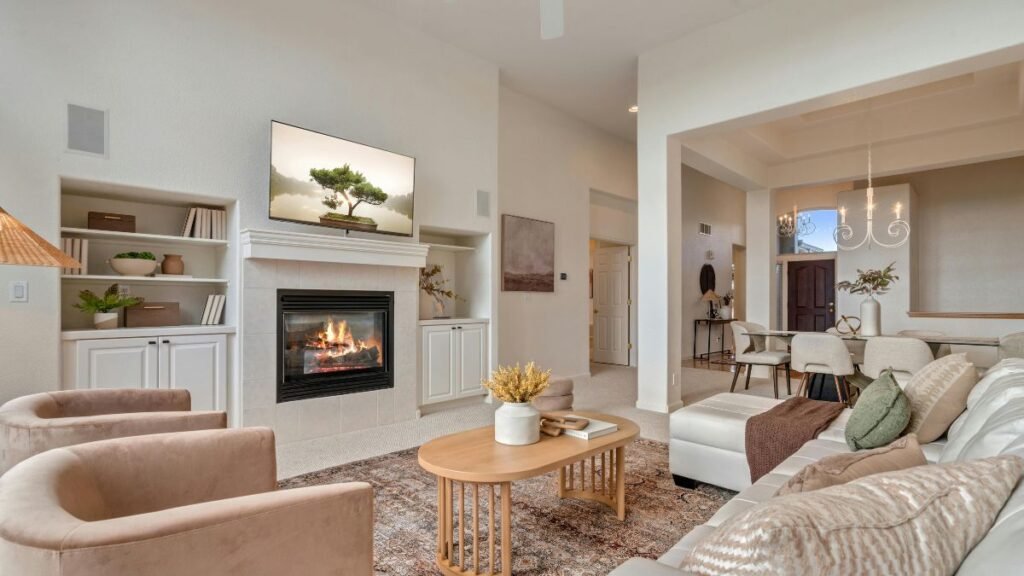
- A fireplace
- A large piece of artwork
- A beautiful rug
- A TV wall
- A large window
- A statement light fixture
Once you have a focal point, avoid making every corner compete with it.
Quick Clutter Fixes That Make a Big Difference
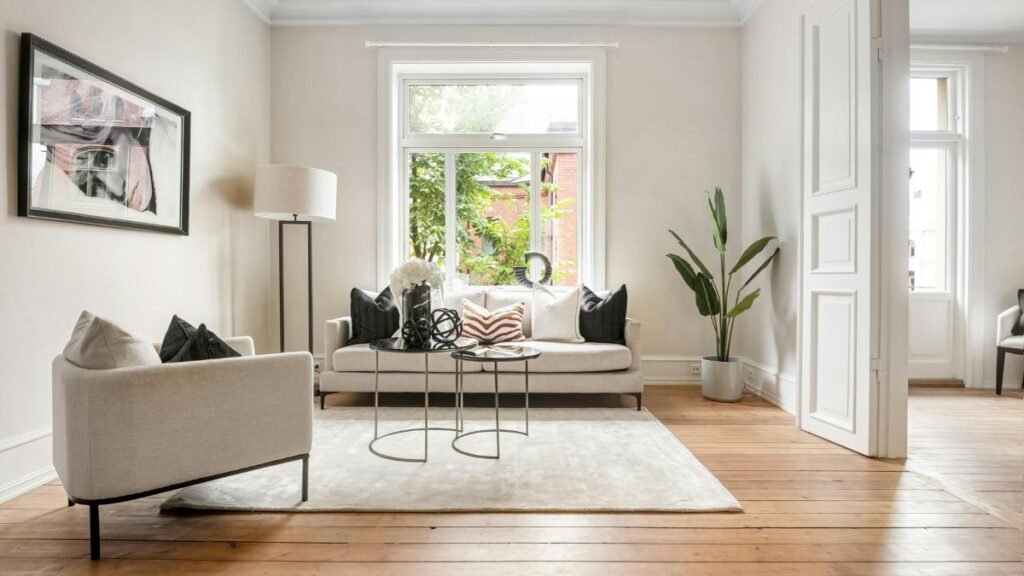
If you want fast results, try these changes first:
- Clear your coffee table.
- Remove one piece of unnecessary furniture.
- Put loose items into baskets.
- Reduce the number of items on open shelves.
- Hide cables and chargers.
- Remove decor that no longer feels meaningful.
- Create a home for remote controls.
- Keep the main walking path clear.
- Limit the number of colors and patterns.
- Step outside the room and look at it again.
That last step is surprisingly useful. Your room can look very different when you stop focusing on individual objects and look at the entire space.
Before You Buy More Storage, Declutter First
Buying storage bins is not always the answer.
If you have too many belongings, adding containers may simply give you more places to hide things.
Instead, declutter first. Then determine what storage you actually need.
A good approach is:
Declutter → Organize → Measure → Buy storage
This prevents you from spending money on storage products that do not solve the real problem.
Comparison: Cluttered vs. Calm Living Room
| Cluttered Feeling | Calmer Alternative |
| Too much furniture | Keep furniture that serves a purpose |
| Packed shelves | Group items with empty space between them |
| Items without a home | Give everyday items dedicated storage |
| Busy patterns everywhere | Use a simple color and pattern plan |
| Blocked walkways | Create clear paths |
| Full coffee table | Keep only a few useful or attractive items |
| Visible cables | Hide or organize cords |
| Random decor | Use a few intentional focal points |
Common Decluttering Mistakes
Trying to organize everything at once
A full-room makeover can quickly become overwhelming.
Instead, work on one category or area at a time.
Keeping things because they were expensive
The money has already been spent. Keeping an item you never use does not recover that money.
Ask whether the item still adds value to your life.
Filling every empty space
Empty space is not wasted space.
A clear shelf or open section of floor can make the entire room feel larger.
Buying decor before fixing the layout
New cushions and decorations cannot solve a furniture problem.
Fix the layout first. Then decide what the room actually needs.
Hiding clutter instead of reducing it
Putting everything into a drawer can create temporary order, but if the drawer becomes impossible to close, the underlying problem remains.
Use storage as a tool, not as a place to permanently hide unwanted belongings.
A Simple 30-Minute Living Room Reset
If your living room feels overwhelming, set a timer for 30 minutes.
First 10 minutes: Remove obvious clutter
Collect trash, dishes, clothes, packaging, and items that belong in other rooms.
Next 10 minutes: Clear surfaces
Reduce the number of things sitting on tables, shelves, and cabinets.
Final 10 minutes: Fix the layout
Straighten furniture, clear walking paths, fold blankets, arrange cushions, and return important items to their homes.
You may be surprised by how much difference half an hour can make.
Frequently Asked Questions
Why does my living room feel cluttered even when it is clean?
A clean room can still feel cluttered because of visual overload. Too much furniture, busy decor, crowded shelves, strong patterns, and poor furniture placement can all create a crowded appearance.
How do I make my living room look less cluttered?
Start by removing unnecessary furniture and clearing visible surfaces. Then create clear walking paths, reduce decorative items, and give everyday belongings a dedicated storage space.
Does a small living room need less furniture?
Usually, yes. A small room benefits from furniture that fits its scale and serves a clear purpose. However, the goal is not to remove everything. The goal is to maintain comfortable seating while preserving useful open space.
How many decorations should I have in my living room?
There is no perfect number. Instead of counting objects, focus on how the room feels. Group similar items together and leave some empty space around them.
Can color make a living room feel cluttered?
Yes. Too many strong colors and competing patterns can make a room feel visually busy. A simple base color combined with a few repeated accent colors can create a more cohesive look.
What should I remove first when decluttering?
Start with obvious trash, broken items, things that belong in other rooms, and objects you never use. Then move on to furniture and decorative items that add little value.
Should I buy storage bins before decluttering?
Usually, no. Declutter first so you know what you actually need to store. Otherwise, you may end up buying containers for items you do not need to keep.
How often should I declutter my living room?
A quick weekly reset can prevent small messes from becoming overwhelming. A deeper decluttering session every few months can help you deal with items that have slowly accumulated.
Conclusion
If you keep asking why your living room feels cluttered, start by looking beyond the amount of stuff you own. The real issue may be furniture that is too large, crowded surfaces, poor storage, blocked pathways, or too many competing visual elements.
The best solution is not always to throw things away. Instead, create a room where every important item has a purpose and a place.
Start small. Clear one table, remove one unnecessary piece of furniture, organize one shelf, and create one useful storage zone. Then step back and see how the room feels.
A comfortable living room does not need to be perfectly minimalist. It simply needs enough order and breathing room for you to relax.









One Comment